
April 26, 2026

Some road trips are about diners and viewpoints. This one is about the shape of a herd in morning light, a pronghorn flashing across sage, and the small jolt of spotting wild horses on a distant ridge.
If you’re planning a wildlife-watching road trip through Idaho, Wyoming, North Dakota and South Dakota, you can stack the odds in your favour. Timing matters, habitat matters, and so does honesty. Wildlife is never guaranteed.
The good news is that a few routes give you repeat chances without turning the whole holiday into a treasure hunt.
Wildlife isn’t on a timetable, which is part of the magic and part of the challenge.
Start in Jackson. In winter, the National Elk Refuge is the headline act, with thousands of elk gathering on the flats north of town. December to March is strongest, and frosty mornings are often best. If you’d rather travel when roads are easier, late September and October are excellent too. That’s when the rut brings more movement, more bugling and more roadside drama, though you’ll want extra distance.
For bison, fold Grand Teton and Yellowstone’s Wyoming side into the same loop if you can. Hayden Valley and the roads south of Yellowstone Lake are classic ground, with late spring for reddish calves and summer for larger herds. For a road-based trip, June to October is the easiest window because many Yellowstone roads close in winter. Keep expectations sensible in midsummer traffic. Animals can be close to the road, but that doesn’t mean they want company.
Pronghorn are easier to miss than people expect. They’re pale, quick, and often farther off than your eyes first tell you. South of Jackson, the Path of the Pronghorn along US 191 towards Pinedale is one of the best-known migration corridors in the country. Dawn and dusk are lovely, but bright early morning can work well too because the open country gives you distance and clean sightlines.
For wild horses, Cody is the practical add-on. McCullough Peaks, east of town, is one of Wyoming’s better-known public viewing areas. Go with patience, a full tank, and a proper map. Sightings vary, tracks can be rough, and public-land access can shift with weather or BLM management work. A tidy Wyoming loop is Jackson, Pinedale, Dubois, Cody, then back through Yellowstone or across the Bighorns.
If you want the least complicated section of this trip, make it the Black Hills. Custer State Park is almost unfairly good for a road trip. The Wildlife Loop Road gives you a real chance of seeing bison, pronghorn and, with luck and good timing, elk in one slow drive. Early morning is best, late afternoon close behind, and the shoulder months of May, June, September and early October are especially pleasant.
The park asks visitors to stay in the vehicle or keep at least 100 yards from bison, elk and other large wildlife. That’s sound advice. Bison look placid until they don’t. During the autumn rut, bulls can be tense and unpredictable. In late spring, cows with calves need space too.
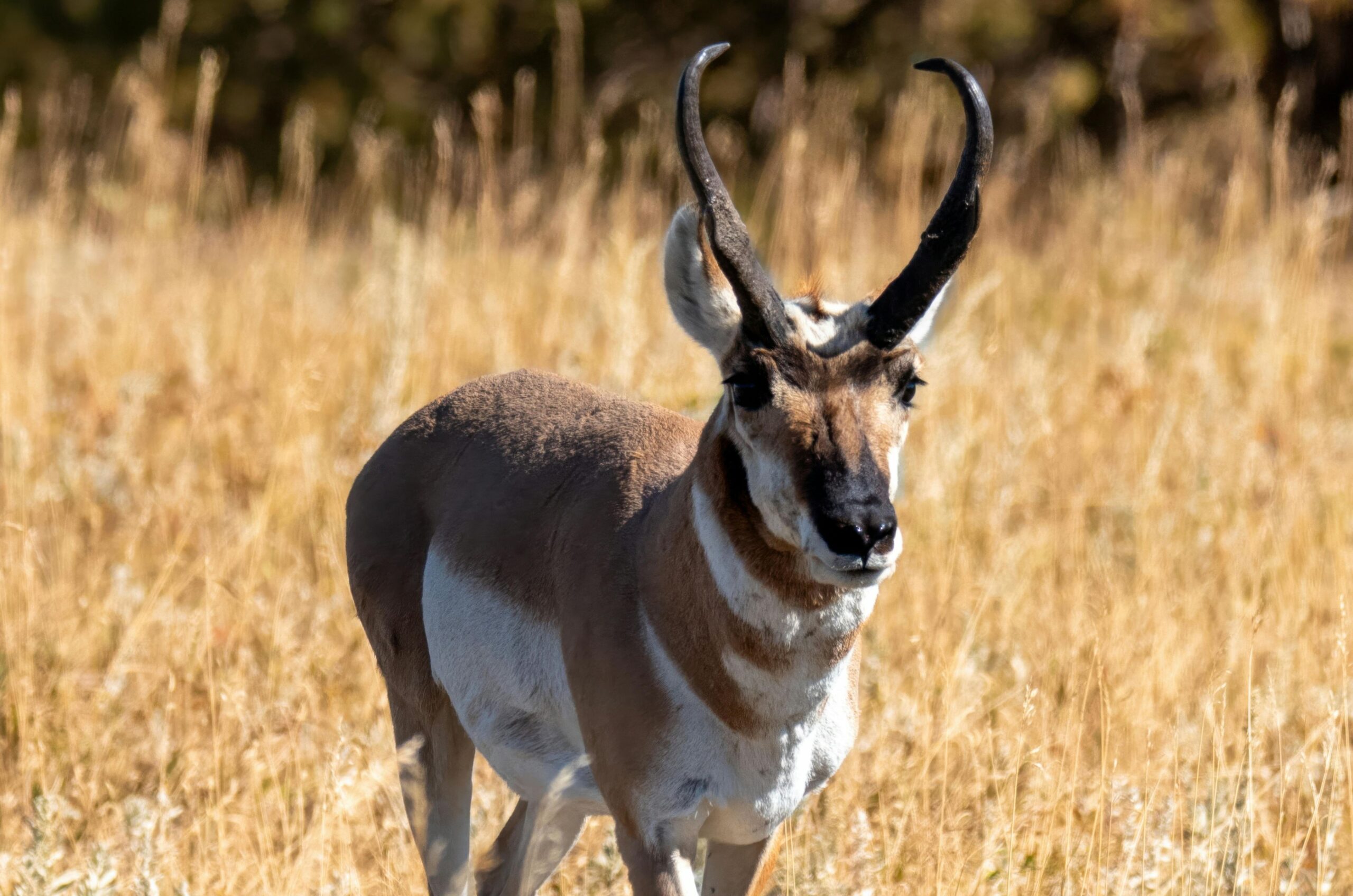
Pair Custer with Wind Cave National Park and Badlands National Park for a stronger South Dakota run. Wind Cave is good for bison and elk, often in a quieter setting than the busier roads around Custer. Badlands is better for bison in the Sage Creek area and pronghorn on the grasslands, especially in the softer light at either end of the day. Base yourself in Custer or Hot Springs for the Black Hills, then finish in Wall if you’re heading east.
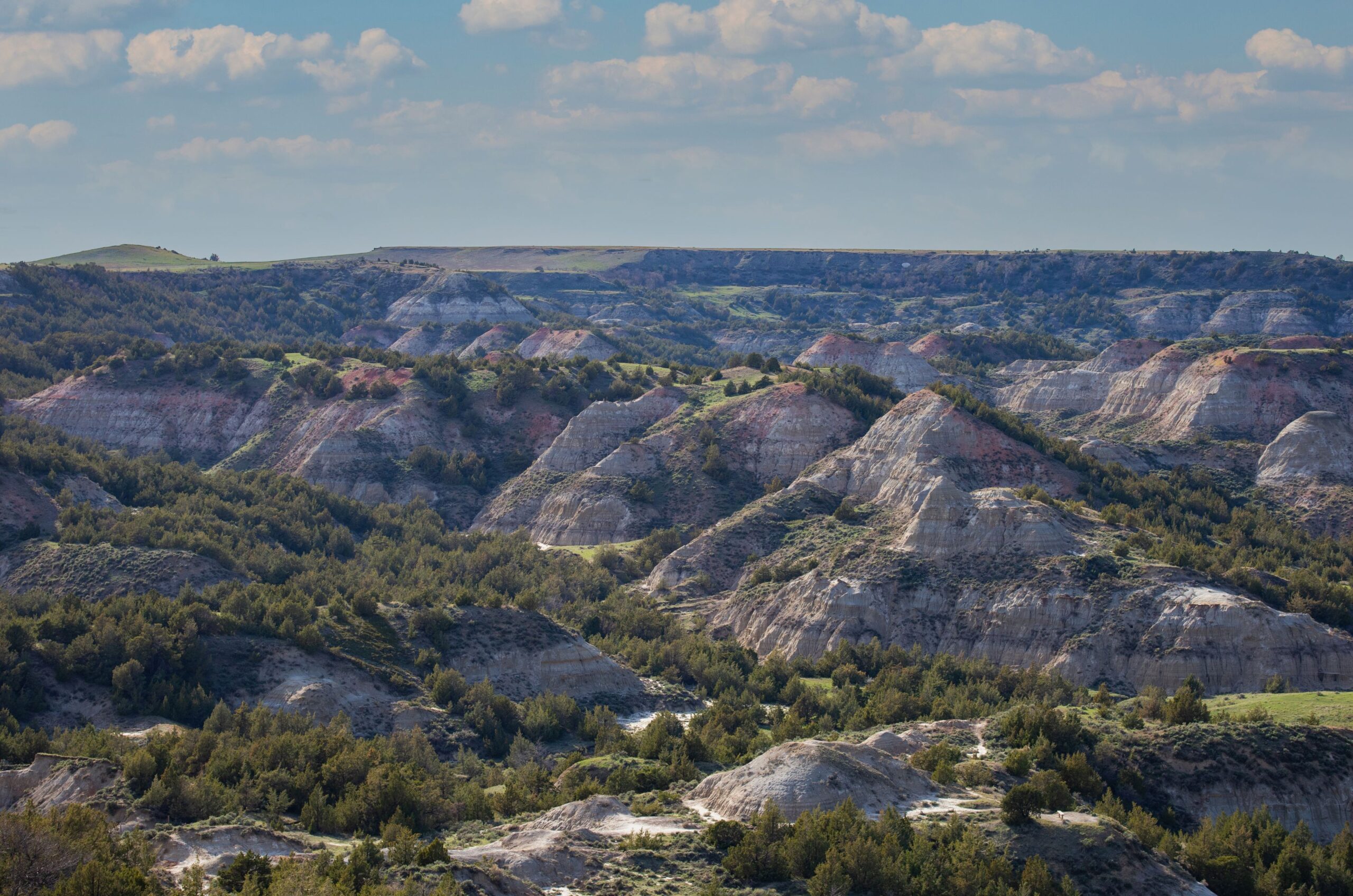
Theodore Roosevelt National Park is North Dakota’s strongest all-round wildlife stop. The South Unit near Medora is the easiest for most travellers, and its scenic loop regularly produces bison, pronghorn and wild horses. The North Unit is quieter and often feels roomier, which photographers tend to like. Elk are present in the park, but they’re less reliable than bison and horses, so treat them as a bonus rather than a promise.
This is a fine place for unhurried watching. Pull over, switch off the engine, and wait. The badlands seem empty until they don’t, rather like a stage before the cast walks on. Spring brings greener grass and young animals. Late summer and early autumn often give cleaner road access and kinder light. Medora is the obvious base, with short hops into the park.
Idaho is the wildcard on this itinerary. It’s excellent for big country, but it’s not the easiest one-stop state if your wish list includes all four species. Think of it as the elk and pronghorn chapter of the trip, with eastern Idaho acting as a bridge into the Greater Yellowstone ecosystem. The Idaho scenic byways guide is handy for stitching together routes around Island Park, the Sawtooth area and the state’s open sage country. Around Island Park and the Henrys Fork corridor, dawn and dusk can turn up elk. In the broad valleys near Fairfield, Carey and the upper Snake country, pronghorn are the better bet. For wild horses in Idaho, sightings are far less straightforward than in Wyoming or North Dakota, so I’d plan those around the other two states instead. For routing, Medora pairs neatly with the Black Hills, whilst Island Park or Driggs pairs neatly with Jackson.
The best wildlife watching is a low-key business. Start early, slow right down, and accept that some of your best sightings will be half a field away. That’s normal. It’s also better for the animals. Winter concentration periods, like elk around Jackson, are brilliant for viewing, but stressed animals can’t afford repeated disturbance.
A few bits of kit make a real difference:
Rut, calving and foaling seasons need extra care. In September and October, bull elk and bison can be more reactive. In late spring and early summer, mothers may defend calves or foals. Don’t call, whistle, edge closer for a photo, or block an animal’s path across a road. If one changes direction because of you, you’re too close. As of April 2026, there isn’t a single region-wide change rewriting these routes, but snow closures, refuge notices and local BLM updates still matter, so check alerts the night before you drive.
The sweet spot for this kind of trip is simple. Build around Wyoming and South Dakota for your highest odds, use North Dakota for badlands bison and wild horses, and treat Idaho as the spacious extension for elk and pronghorn.
Go at first light, keep your distance, and let the animals set the pace. That’s when a wildlife-watching road trip stops feeling like a checklist and starts feeling like the real West.