
Self Drive Tour

Gangsters and Ghosts

11 Days 10 Nights

From £2399.00 per person

United States

Superior

Gangsters and Ghosts: A Self-Drive Journey Through the Midwest’s Darkest, Most Haunted History

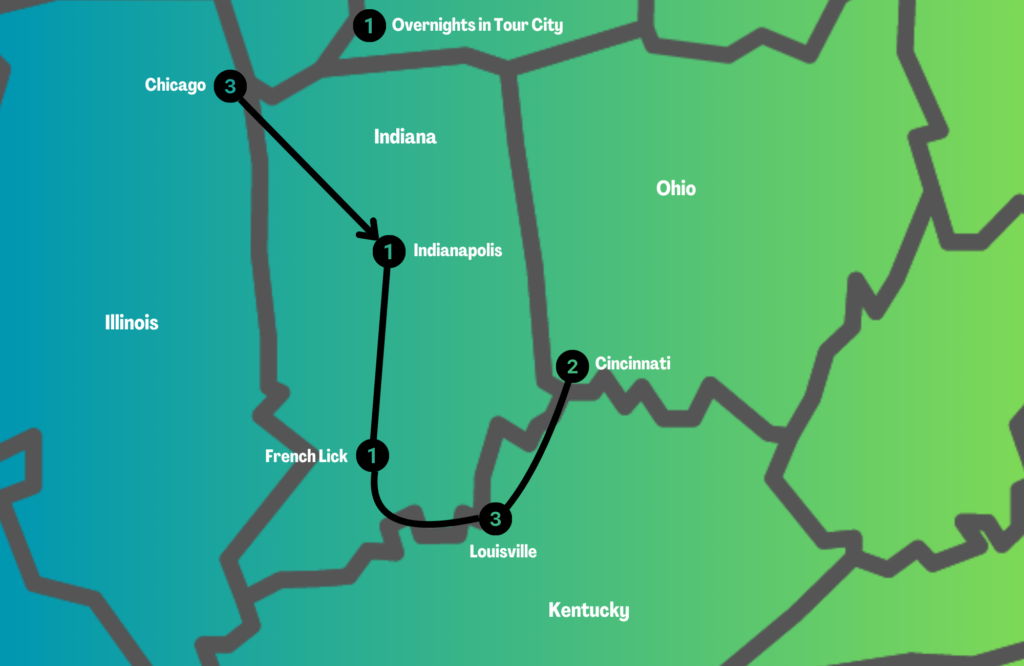
This 11-day self-drive traces a single, true story down the spine of the American Midwest: Prohibition-era organised crime and the ghosts it left behind. From the Chicago streets where Capone and Dillinger made their names, south through the small-town speakeasies of Indiana, into Louisville’s Seelbach Hotel — where Capone kept a hidden card room and F. Scott Fitzgerald drank his way to The Great Gatsby — and on to Cincinnati, home turf of real-life bootlegging king George Remus. Boutique, characterful properties are used throughout, each chosen because it has its own place in the story, not simply because it’s convenient.

Drive days are kept short and manageable (never more than three hours), leaving plenty of time each day for guided tours, distillery visits, and a very good dinner.

Departure

Chicago

Departure Date

Various

Price From

£2399 per person

Price Includes
  • 10 Nights' Accommodation

  • Intermediate Size Rental Car

  • Local accommodation taxes

  • Untouchables Walking or Trolley Tour

  • 'Embers of the Windy City Walking Tour

  • Chicago Architecture Center's River Cruise

  • Guided daytime history tour of Waverly Hills Sanatorium

Price Excludes
  • Flights (please let us know if you would like flights including at the time of enquiry)

  • Meals (unless shown in inclusions)

  • Car One Way Drop Off Fee $130 payable locally

  • Anything not shown as included

Tour Gallery
Itinerary
  • Day 1: Chicago

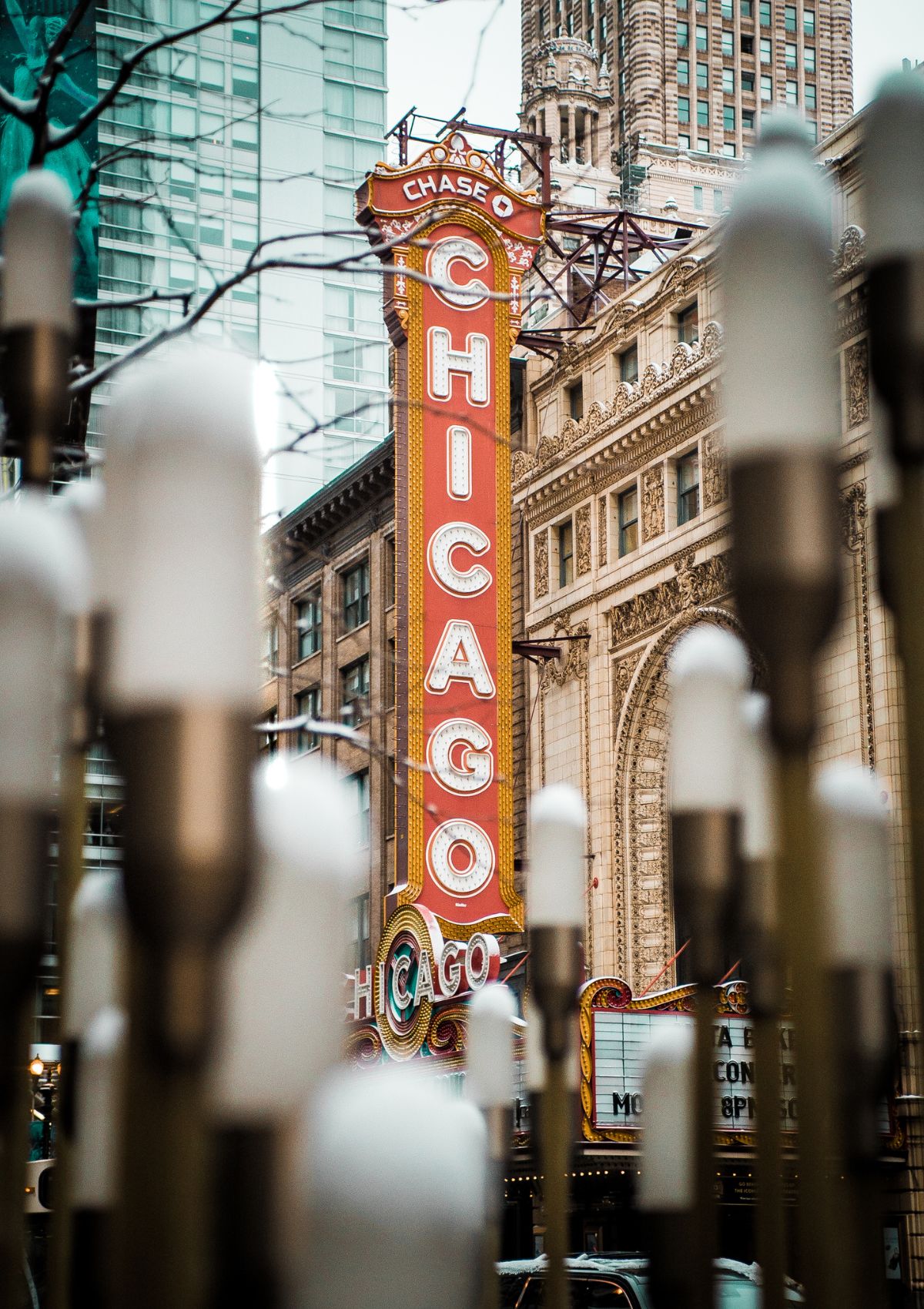
    Collect your rental car and check in to the Chicago Athletic Association Hotel — a beautifully restored 1893 Venetian Gothic landmark on Michigan Avenue, directly across from Millennium Park, with a genuinely boutique feel that carries through from the historic public rooms into smart, modern guest rooms. This evening, head to the Green Mill Cocktail Lounge — Al Capone's favourite jazz haunt, complete with the escape tunnel that once ran behind the bar.

  • Day 2: Chicago

    A full day exploring the city's gangster history: an Untouchables walking or trolley tour taking in the Biograph Theater, where John Dillinger was shot by federal agents in 1934, and the site of the St Valentine's Day Massacre. The afternoon is free for the Magnificent Mile, before an evening on Windy City Ghosts' 'Embers of the Windy City' walking tour, through some of Chicago's most haunted addresses — the Red Lion Pub (a former mobster haunt dating to 1882), the Golden Dagger, once rumoured home to an occult society, and more of the city's darkest stories, told nightly rain or shine.

  • Day 3: Chicago

    A second full day in Chicago at a gentler pace. Late morning aboard the Chicago Architecture Center's river cruise, a 90-minute guided journey past over 50 landmark buildings and one of the best-rated boat tours in the country. In the afternoon, take in the Chicago History Museum before a stop at Holy Name Cathedral — its cornerstone still bears bullet scars from the 1926 assassination of gangster Hymie Weiss, gunned down on the church steps. Evening free in Old Town or along Wells Street.

  • Day 4: Chicago to Indianapolis, Indiana

    A relaxed late-morning drive south into Indiana (approx. 3 hours). Check in and spend the afternoon at leisure downtown before dinner and drinks at the Slippery Noodle Inn — reputedly Indiana's oldest bar, once used by local gangs for gambling and bootlegging, and still marked by bullet holes from a shootout. It has a long-standing reputation as one of the most haunted bars in the Midwest.

  • Day 5: Indianapolis to French Lick

    Before leaving the city, a stop at Crown Hill Cemetery to visit John Dillinger's grave — still one of the most-visited graves in America. Then a short, scenic drive south (approx. 1.5 hours) to French Lick, home to the historic West Baden Springs Hotel, a Prohibition-era gambling resort once favoured by the very mob figures traced through Chicago. We'd suggest that you enjoy dinner in the hotel's own grand dining room.

  • Day 6: French Lick to Louisville

    A short late-morning drive to Louisville (approx. 1.5 hours) and check-in at the Seelbach Hilton. This evening, take the hotel's own history tour: Capone's hidden card room, reached via a secret passage, and the story of the hotel's resident 'Lady in Blue' ghost. F. Scott Fitzgerald drank here in the 1910s and used the Seelbach as his model for Tom and Daisy Buchanan's wedding in The Great Gatsby.

  • Day 7: Louisville

    A morning guided daytime history tour of Waverly Hills Sanatorium, one of the most storied sites in American paranormal lore. The afternoon is free, or given over to a Bourbon Trail distillery with its own Prohibition-era story to tell — Michter's and Evan Williams both work well here.

  • Day 8: Mammoth Cave (Day Trip)

    A full day at Mammoth Cave National Park (approx. 1.5 hours each way), the world's longest known cave system. Choose from the standard history tour or, for the more adventurous, one of the park's own lantern or ghost-themed tours. Return to Louisville for a final evening — dinner at Doc Crow's or Jack Fry's.

  • Day 9: Louisville to Cincinnati

    A short, easy drive north-east to Cincinnati (approx. 1.5 hours). Check in and spend the afternoon exploring Over-the-Rhine, once home to Cincinnati's German immigrant community and, in the 1920s, the base of real-life 'King of the Bootleggers' George Remus. Dinner within walking distance of the hotel.

  • Day 10: Cincinnati

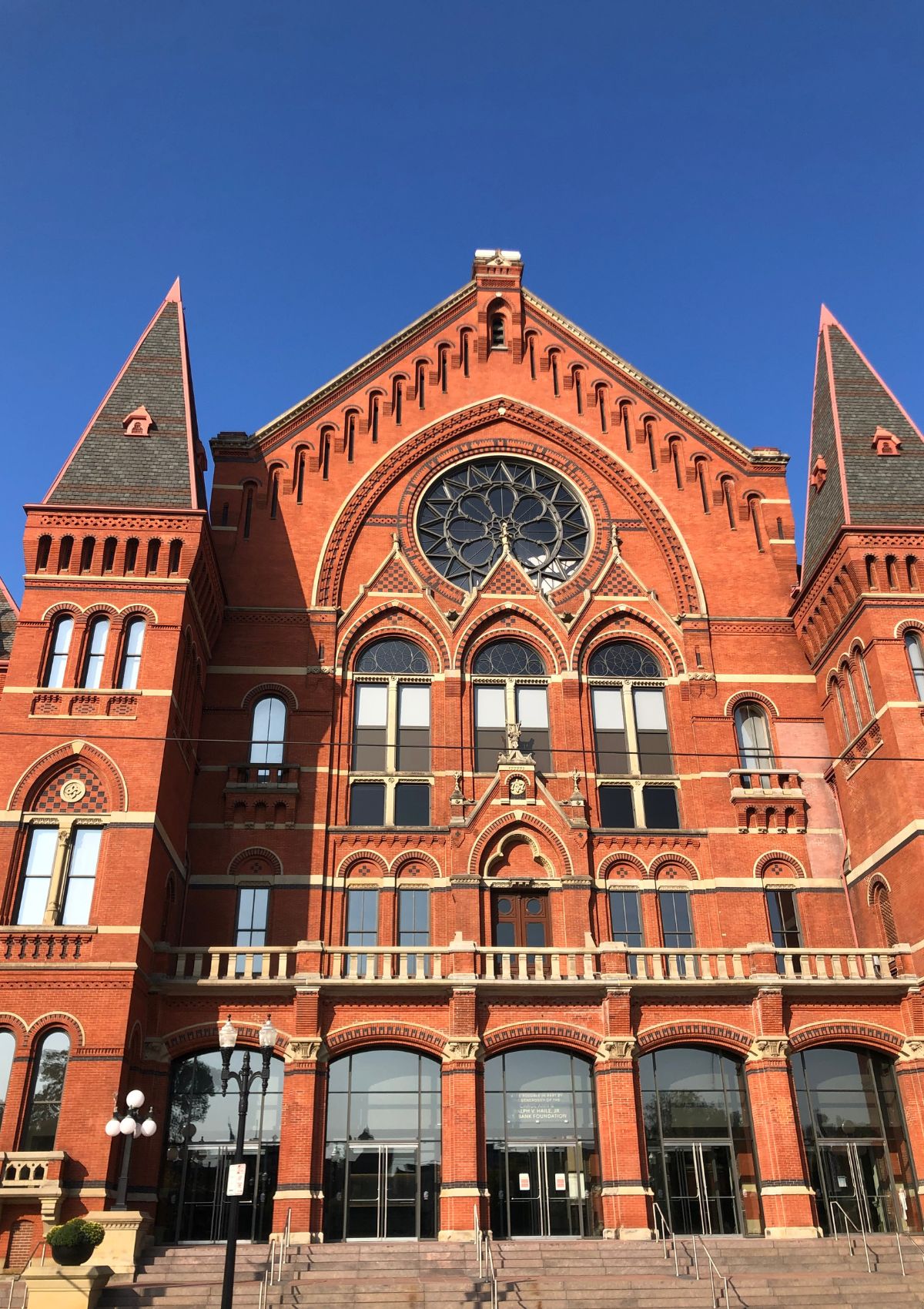
    A day at leisure to explore the city, with two options to build the afternoon and evening around: a visit to Cincinnati Music Hall, directly across the street from the hotel and reputedly built over a paupers' cemetery, or a short drive to Bobby Mackey's Music World, one of the most talked-about haunted bars in the country. Its original Wilder, Kentucky building was demolished in December 2024; the venue — folklore, 'Room of Faces' wall and all — currently operates from a temporary site in nearby Florence, KY, with a rebuild planned for the original land. Worth confirming the current location before departure.

  • Day 11: Cincinnati - Departure

    Drop off your rental car at Cincinnati/Northern Kentucky International Airport (CVG) ahead of your onward flight home.

Hotels
  • Chicago

    Chicago Athletic Association Hotel, Chicago

    Built in 1893 as an exclusive Venetian Gothic gentlemen's club on Michigan Avenue, this landmark building spent over a century as one of Chicago's most storied private institutions before its sensitive restoration into a boutique hotel. Guests check into a space where the grandeur is genuinely original — soaring vaulted ceilings, a game-room-turned-lounge, and views straight across to Millennium Park — with the boutique feel carrying through from the historic public rooms into smart, contemporary guest rooms.

  • Indianapolis

    Le Méridien Indianapolis

    Set inside the city's original 1888 Union Station, a National Register of Historic Places landmark, this hotel puts guests directly inside Indianapolis's transport history rather than simply near it. The building's grand architecture has been carefully preserved through its conversion, making it a fitting, characterful base for exploring the self-declared "Crossroads of America."

  • French Lick

    West Baden Springs Hotel, French Lick

    Once dubbed the "Eighth Wonder of the World" for its extraordinary domed atrium — the largest free-standing dome in the world when it was built in 1902 — this resort has a past as colourful as its architecture, having served as a favoured Prohibition-era gambling retreat for the mob figures traced throughout this tour. A stay here is as much a step back into that era as any guided tour.

  • Louisville

    The Seelbach Hilton, Louisville

    A Louisville institution since 1905, the Seelbach carries two genuinely famous stories within its walls: a hidden card room used by Al Capone, reached via a secret passage, and a place in literary history as F. Scott Fitzgerald's model for the wedding scene in The Great Gatsby. Guests can take the hotel's own history tour to hear both firsthand, alongside the story of its resident "Lady in Blue" ghost.

  • Cincinnati

    The Symphony Hotel, Cincinnati

    An intimate, nine-room boutique property inside a beautifully restored 1871 building, the Symphony Hotel sits directly across the street from Cincinnati Music Hall — reputedly built over a paupers' cemetery — putting guests within easy reach of the city's most talked-about ghost story without leaving the neighbourhood.

HIGHLIGHTS

    • Untouchables gangster tour of Chicago, taking in the Biograph Theater and the St Valentine’s Day Massacre site
    • ‘Embers of the Windy City’ evening walking tour — the Red Lion Pub, Golden Dagger, and Chicago’s darkest hauntings
    • Chicago Architecture Center river cruise and a stop at Holy Name Cathedral, still bearing bullet scars from a 1926 mob hit
    • The Slippery Noodle Inn, Indiana’s oldest bar and a former Prohibition-era gambling den — still carrying its bullet holes
    • Dillinger’s grave at Crown Hill Cemetery, Indianapolis
    • Overnight in the domed West Baden Springs Hotel, once a favoured mob gambling retreat
    • The Seelbach Hilton, Louisville — Capone’s hidden card room and the Fitzgerald/Gatsby connection
    • Daytime history tour of Waverly Hills Sanatorium
    • A Bourbon Trail distillery with its own Prohibition-era backstory
    • Full day at Mammoth Cave National Park
    • Cincinnati’s Over-the-Rhine district, George Remus’s old stomping ground, plus Bobby Mackey’s Music World and Cincinnati Music Hall

This itinerary is fully flexible and can be customised to suit your individual needs. Simply send us your request, and we’ll be delighted to provide a personalised quote.

The Gangsters of Chicago

Chicago’s gangster era was born from an unlikely source: the 18th Amendment. When Prohibition took effect in 1920, it didn’t stop Americans from drinking — it just handed control of an enormously profitable industry to whoever was willing to break the law to supply it. Chicago, already a rough, fast-growing industrial city with deep political corruption and a patchwork of ethnic gangs, was perfectly primed to become the epicentre of organised crime in America.

The man most associated with that era is, of course, Al Capone. He arrived from Brooklyn in 1919 as a young enforcer for gang boss Johnny Torrio, and by the mid-1920s had built an empire worth an estimated $100 million a year from bootlegging, gambling, and prostitution. Capone cultivated a public image as a folk hero — funding soup kitchens during the Depression, tipping generously, posing for photographers — even as his organisation waged brutal turf wars against rivals like Bugs Moran’s North Side Gang. That rivalry culminated in the St. Valentine’s Day Massacre of 1929, when seven of Moran’s men were lined up against a garage wall and shot dead by men dressed as police officers — an event that shocked the nation and marked the beginning of the end for Capone’s public tolerance, even if it was ultimately tax evasion, not murder, that finally sent him to prison in 1931.

Capone wasn’t the only name that mattered. Dean O’Banion ran the North Side before being gunned down in his own flower shop in 1924, sparking the war that Moran would later inherit. Hymie Weiss, O’Banion’s successor, was assassinated on the steps of Holy Name Cathedral in 1926 — the church’s cornerstone still bears the bullet scars today. And while not a Chicago gangster in the traditional bootlegging sense, John Dillinger became the city’s other great outlaw legend a few years later, robbing banks across the Midwest before being shot dead by federal agents outside the Biograph Theater in 1934, reportedly after watching a gangster film.

What makes Chicago’s gangster history so durable, decades later, is how visible it still is. The buildings are still standing — the Green Mill still pours drinks in the room where Capone had his own private booth, the Biograph still shows films, Holy Name Cathedral still stands on the same corner. It’s not history behind glass in a museum; it’s a story you can walk into.

We gratefully acknowledge the photographers and sources whose images help bring our content to life. All photos are used with permission or sourced from licensed providers. Please contact us if you believe any credit has been omitted or if you wish to request removal of an image.

Leave a Comment:

Your email address will not be published. Required fields are marked *