
August 7, 2026

North Dakota’s badlands do not announce themselves with much fuss. One minute we are rolling along I-94 beneath a wide prairie sky, and the next the ground has folded into striped buttes, dry gullies and ridges, as though someone has taken a paintbrush to the earth.
We designed this route for travellers who want big scenery without the queues found in better-known parks. If you are picturing the crowds at Badlands National Park in South Dakota, this drive offers something far quieter — a solitude that feels increasingly rare. We would give it three or four days, splitting your time between Medora and Watford City, and leaving plenty of room for bison traffic jams, weather changes and the odd unplanned pull-over. Our route joins the park’s South Unit and North Unit, with a handful of proper badlands stops woven in between.
We start in Bismarck or fly into Dickinson, then drive west to Medora to collect maps at the visitor centre before exploring the South Unit. We spend at least one full day around Medora before travelling north to the North Unit near Watford City — the two units sit apart, so the drive between them on public roads is a proper part of the day rather than a formality. Bison sightings are never guaranteed, though early morning and late afternoon give the best odds, and it’s always worth checking the official park alerts before setting off, particularly after heavy rain, snow or summer storms.
Theodore Roosevelt National Park splits into three distinct areas, each with its own sense of isolation. Most visitors, ourselves included, focus on the South Unit near Medora and the North Unit near Watford City, while the quieter Elkhorn Ranch Unit sits between them, reached by rougher back roads and best treated as an optional extra.
It’s tempting to squeeze both main units into one hurried day, but we would resist that urge, since the drive itself is not difficult — it’s the stops that matter. These are landscapes made for leaning on a fence rail, watching a storm cross the buttes, or waiting while a bison decides the road belongs to him, and rushing through does the place a disservice. If you’re building a longer trip through the region, we’d happily pair this itinerary with a visit to the Black Hills and Mount Rushmore for a fuller Great Plains adventure.
We usually start in Bismarck, which has the most practical airport and widest car hire choice, though Dickinson sits closer to Medora if you don’t mind more limited flights. If you’re already crossing the northern Great Plains, I-94 makes the South Unit an easy stop between Bismarck and Montana.
Here’s a comfortable four-day outline we’d recommend:
| Day | Route | Approximate driving time | Overnight |
|---|---|---|---|
| 1 | Bismarck to Medora via Painted Canyon | 2 hours 15 minutes | Medora |
| 2 | Theodore Roosevelt National Park South Unit | 1 to 3 hours in the car | Medora |
| 3 | Medora to Elkhorn Ranch area and North Unit | 2 to 3 hours, longer on gravel roads | Watford City |
| 4 | North Unit, then on to Bismarck | 3 hours 30 minutes to Bismarck | Bismarck or onward |
These driving times are estimates without long stops, and in badlands country that caveat matters more than usual — a ten-minute viewpoint can easily stretch to forty when the light is good and a prairie dog town is in full voice. We’ve built plenty of room into each day for exactly that.
Before you leave, we’d download offline maps, since mobile signal can fade on rural roads, particularly around Elkhorn Ranch and the quieter gravel routes. A paper map isn’t old-fashioned out here — it’s genuinely useful, and it looks rather good spread across a picnic table. For entry rules, passes and current seasonal arrangements, the National Park Service visitor information is worth checking directly rather than relying on an old social post.
The first day is about easing into the landscape. We’d leave Bismarck on I-94 and head west towards Medora, roughly 217 km away, on a road that stays straightforward even as the scenery begins to break apart into something more interesting.
Our first proper stop is always Painted Canyon, just off I-94 east of Medora — a fine introduction to the park’s geology, with layered cliffs in soft browns, rust-reds, pale greys and mustard tones. The overlook sits close to the motorway, so it works well even arriving late in the day, and if there’s time, the short trail down from the rim gives a closer look at the folded ground, where gullies and dry washes weave a maze below. We’d suggest shoes with some grip, since badlands clay turns slippery fast when wet, and even a light shower can turn a simple path into a messy affair.
We always carry water in the car, even on a mild-looking day, since summer temperatures climb quickly and the wind and dry air make it easy to underestimate how much you’ve sweated. A sun hat, sun cream and a light waterproof earn their place too — the weather here has a habit of changing its mind.
We’d aim to arrive in Medora by late afternoon. As the trip’s natural base, this historic town carries the spirit of the Rough Riders who once roamed this frontier, and staying at the Rough Riders Hotel gives a genuine taste of that history before heading out for the Pitchfork Fondue or an evening at the Medora Musical.
Medora is also well placed for an evening drive into the South Unit, and we’ve had some memorable wildlife encounters this way, with bison herds and wild horses roaming close to the road. We’d always keep our distance and stay in the vehicle when animals are near — the view belongs to everyone, but the road doesn’t belong to us.
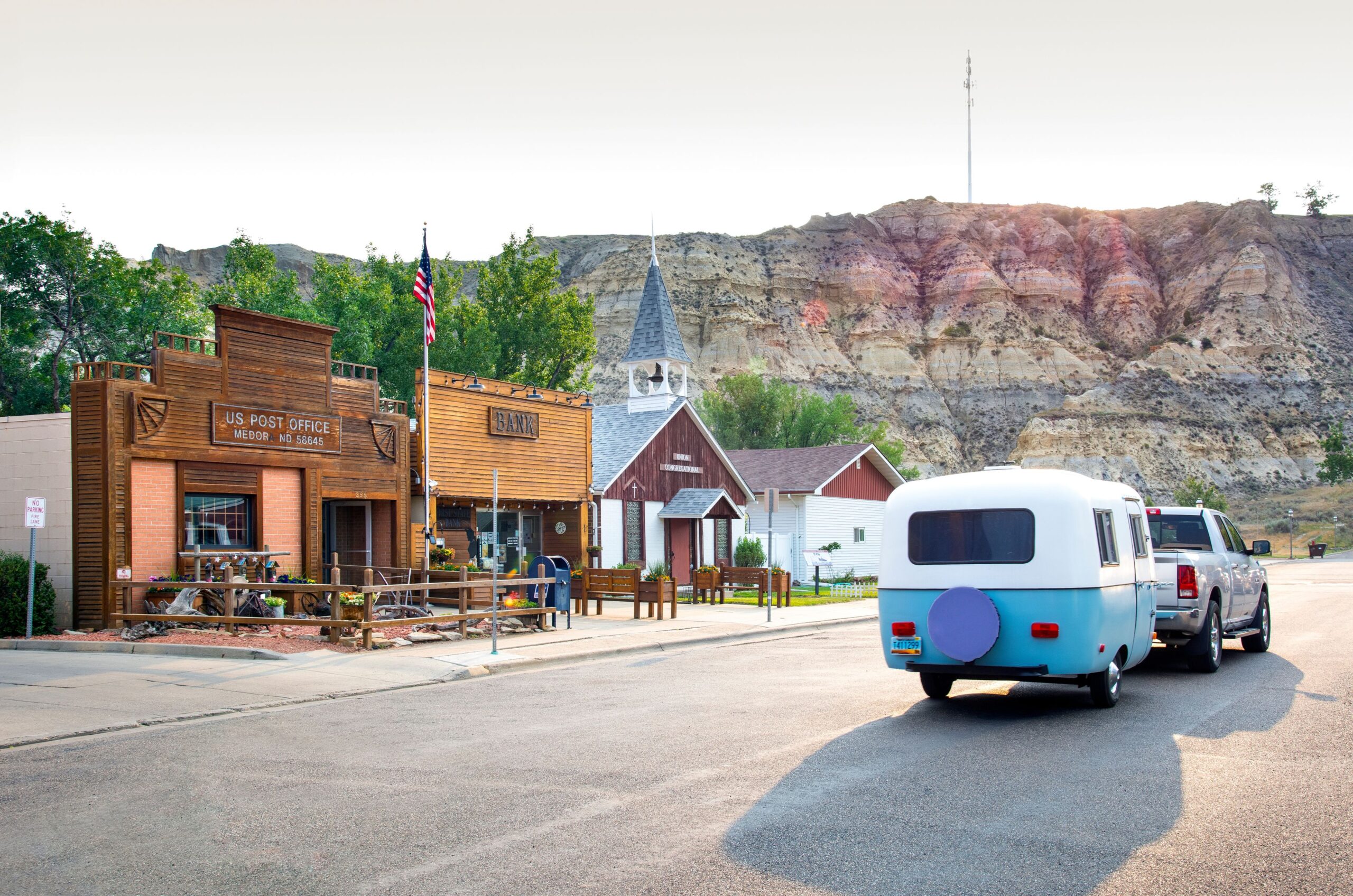
Medora, North Dakota
The South Unit is the more accessible side of the park, and it’s usually where first-time visitors get their first proper look at the badlands. The entrance sits just a few minutes north of Medora, and we’d always stop at the visitor centre first to grab maps and, for families, the Junior Ranger booklets.
The park road is often described as a scenic loop, though road works, weather damage and seasonal conditions can affect which sections are open, so we’d check the South Unit road conditions before heading out and plan the day around whatever access is available.
We like to start early. Morning light brings out the colour in the cliffs, animals tend to be more active before the heat builds, and the popular overlooks feel far calmer than they will by midday.
Stops worth slowing down for
Boicourt Overlook makes a strong first stop, looking out across a wide sweep of Little Missouri River country — the kind of view that suddenly makes sense of the whole loop road. Further along, Skyline Vista offers a broad perspective over the badlands, while Buck Hill gives one of the better short climbs; steep in places but manageable for most reasonably fit walkers, and the ridges from the top stretch out in every direction, grassland rolling into broken earth. For something gentler later in the day, Wind Canyon Trail follows a grassy bluff above the Little Missouri River — the name is well earned, so we’d hold onto our hats.
We’d give bison far more space than feels necessary. They can look peaceful, even sleepy, but they’re powerful wild animals capable of moving much faster than expected. The South Unit is also home to a great many prairie dogs, whose sharp squeaks you’ll hear from the grass before you spot them — worth pulling over only where it’s safe and permitted, and keeping an eye out for burrowing owls near the colonies.
We’d spend the evening back in Medora, eating early if you want a quieter meal, then return to the park near sunset if the roads and gates allow. The badlands soften in the evening light, and even a familiar viewpoint feels different the second time round.
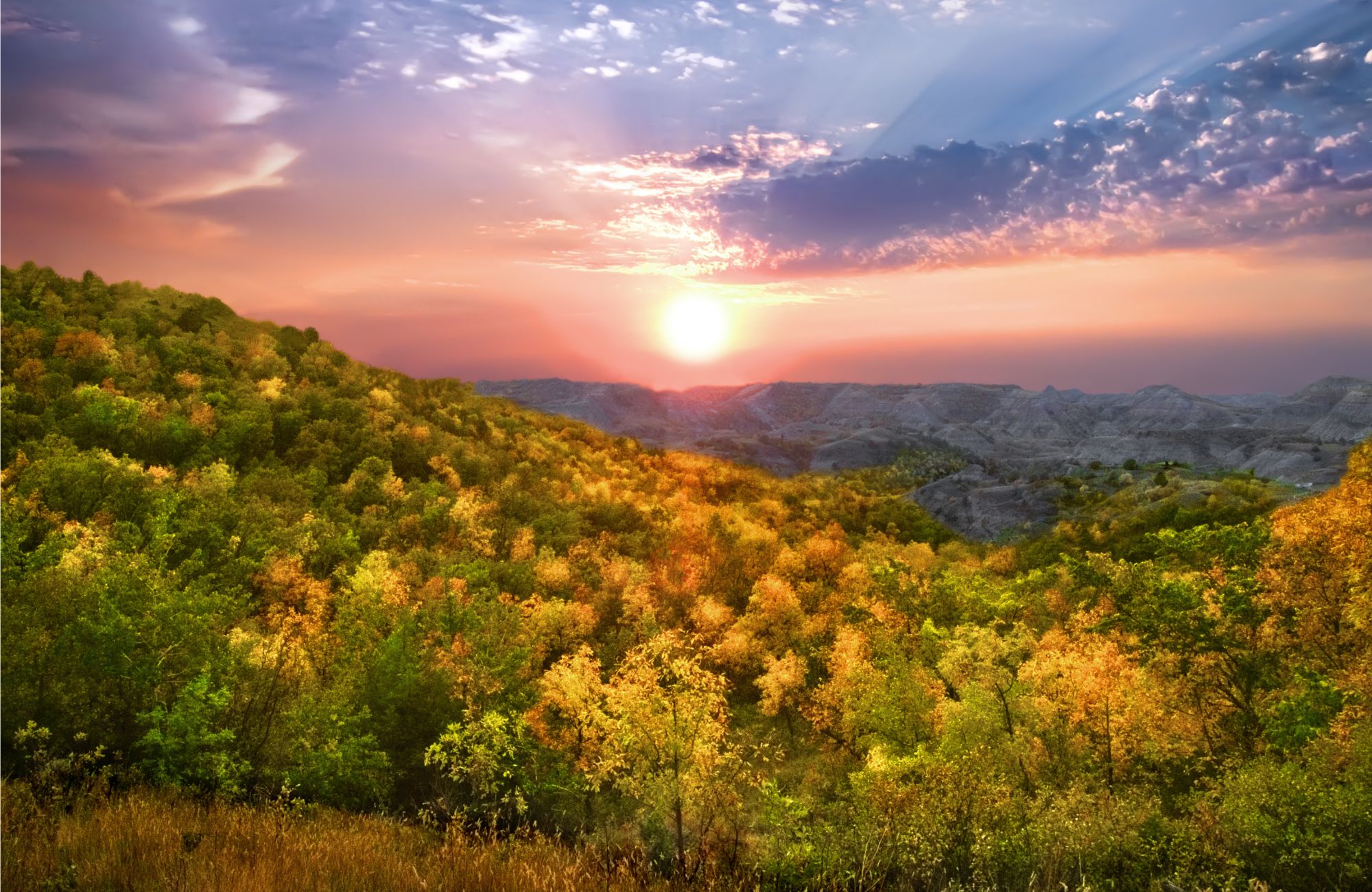
This transition day has a slightly more adventurous feel, as we leave the busier South Unit behind for the quieter roads and more remote views of the North Unit. The direct drive from Medora to the North Unit entrance usually takes around two hours, depending on route and conditions, and we’d always fill up with fuel before leaving — Medora and Watford City have services, but there’s little in between once you turn onto the smaller roads.
The Elkhorn Ranch Unit makes a worthwhile detour for anyone interested in Theodore Roosevelt’s history here. He established his home on this spot in the 1880s, after personal loss led him west in search of hard work and open space, and although the ranch buildings are long gone, the setting remains peaceful, tucked beside the Little Missouri River. It’s easy to see how this rugged landscape shaped the man and sparked his lifelong conservation instincts.
Getting there is part of the story, though the access roads are unpaved and can turn difficult after rain — a high-clearance vehicle helps, and we wouldn’t take a standard hire car down a muddy road simply because the map says it’s possible. If the route looks doubtful, we’d turn around; the landscape isn’t going anywhere. The site itself is simple, a short walk to the ranch location with an interpretive setting rather than a reconstructed attraction, and that restraint suits it well — there’s no need for a dramatic museum when the river, cottonwoods and open hills still do the talking. If the road is dry and time allows, it’s a thoughtful pause between the two main areas of the park; if not, we’d skip it without regret and take the paved route north, arriving with more energy for the North Unit.
We’d settle into Watford City for the night — practical rather than pretty, with a wider range of chain hotels, restaurants and supermarkets than Medora offers. Worth booking ahead in summer, around local events, and whenever oilfield demand tightens availability.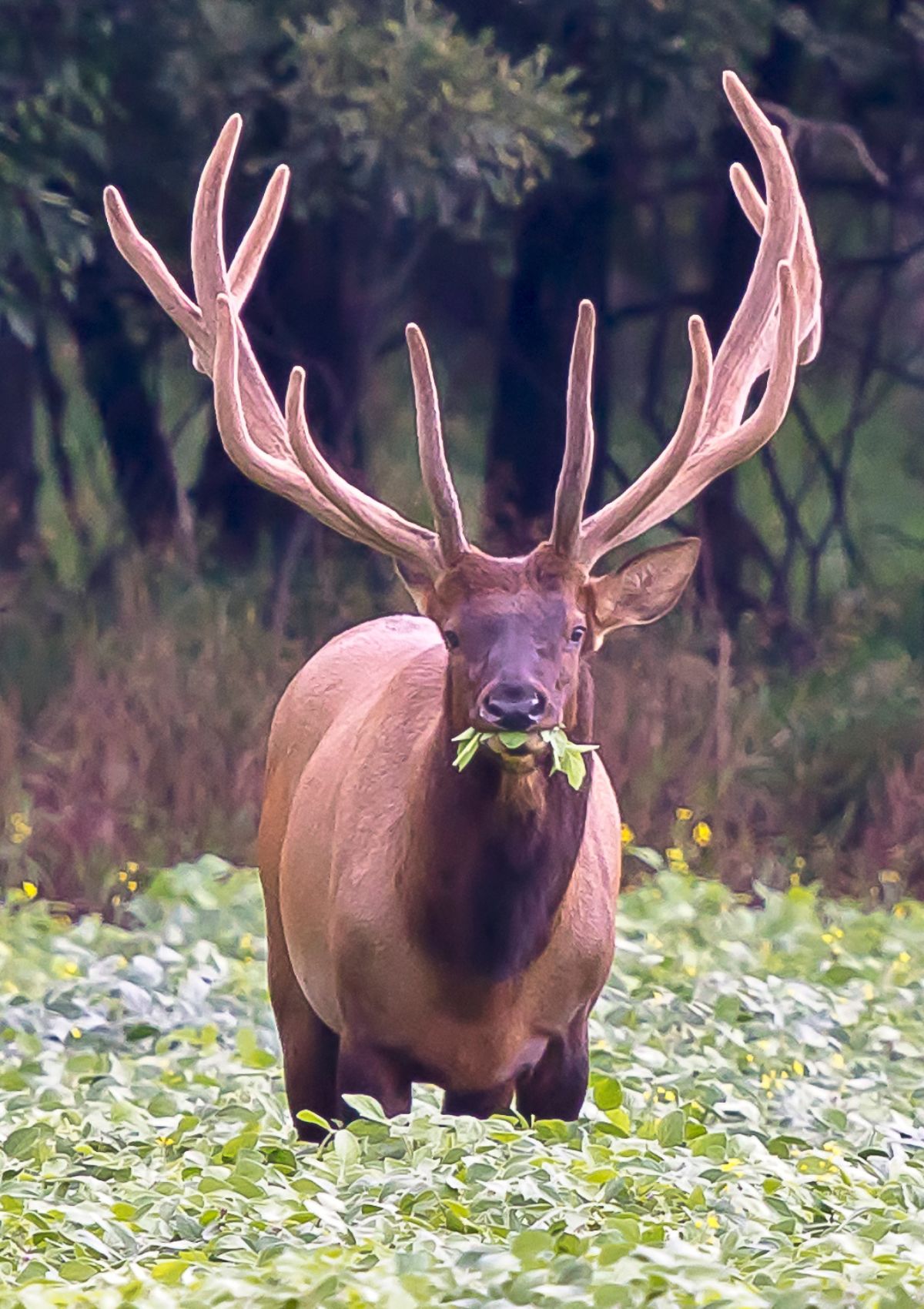
The North Unit covers less road mileage than the South Unit, but it holds some of the park’s most striking overlooks. The entrance lies south of Watford City, and the out-and-back scenic drive runs about 23 km each way — an easy day on paper, though we’d happily spend the whole morning and afternoon exploring it properly.
We’d start at River Bend Overlook, where the Little Missouri curves through the badlands below in a view that’s wide and dramatic without ever feeling fussy — just a few steps from the car and you’re looking over a scene that feels almost too spacious to take in. Further along, Oxbow Overlook and the Caprock Coulee area are worth the stop too, with rugged hiking trails combining grassland, eroded slopes and a good chance of prairie dogs, plus hawks overhead and deer moving through the draws if you’re patient.
The road ends near Caprock Coulee Trailhead, where the terrain opens out and turns properly wild. For a longer walk here, we’d study the route carefully, carry more water than seems necessary, and let someone know where we’re headed — there’s little shade and no quick escape from a brewing storm.
The North Unit often feels calmer than the South Unit, especially outside school holidays, though calm doesn’t mean empty — we’ve had memorable encounters here with bison, elk, mule deer, wild turkeys and coyotes, though as ever in a national park, nothing is promised. A sighting is a gift, not something to tick off before lunch. The National Park Service asks visitors to stay at least 25 metres from most animals, and much further from bears or wolves — in practice, we’d rely on a zoom lens, binoculars, or the simple rule that if an animal has noticed you, you’re probably too close.
After the North Unit, we’d either settle into a relaxed evening in Watford City or begin the roughly 362 km drive back to Bismarck. Heading west instead, the route flexes easily towards Williston and Montana — part of what makes it such a rewarding trip to plan around.
You don’t need to be an expert hiker to enjoy this park. While Badlands National Park across the border can draw a crowd, North Dakota’s badlands still offer a more secluded experience, and a few short walks break up the driving nicely, putting you at ground level where the scent of sagebrush and the sound of wind carry further than you’d expect.
We’d choose one or two trails rather than trying to cover every path — Buck Hill and Wind Canyon work well in the South Unit, and the Caprock Coulee Nature Trail makes a good introduction to the ecosystem in the North. The official trail information is the best place to check distances, closures and current advice.
Summer afternoons can bring thunderstorms, so we’d start longer walks early, especially on exposed ridges — lightning is no joke when you’re the tallest thing around for several hundred metres. Spring and autumn bring cooler temperatures, fewer visitors and lovely light, though conditions can shift quickly; summer remains the easiest season for a first visit, with long days and more reliable road access, while winter offers a starker beauty and real solitude, at the cost of snow, ice and a different sort of trip altogether.
A few habits that make the journey smoother:
Camping is available within and near the park, though facilities vary by season, and the park’s camping page has current details. For most first-time visitors, we’d suggest a hotel or cabin in Medora and Watford City instead, particularly if summer storms are forecast.
How many days should we spend in the park? We’d dedicate at least three to four days to explore properly — enough time to experience both units without rushing, and to absorb the odd bison traffic jam or weather delay along the way.
Are the North and South Units connected by a direct road? No — the two units sit apart and require driving on public roads between them, a journey of roughly two to three hours depending on route and conditions. We’d treat this as a proper transition day between bases in Medora and Watford City rather than a formality.
What’s the best way to see wildlife? Sightings are never guaranteed, but early morning and late afternoon give the best odds of spotting bison, wild horses and mule deer. We’d always keep a safe distance and stay inside the vehicle when animals are near the road — they’re powerful wild creatures, however calm they look.
Should we worry about mobile signal? We wouldn’t rely on it. Download offline maps before setting off through the park or the surrounding rural roads, and keep a paper map as backup — it remains a genuinely useful tool out here.
This park rewards travellers who resist treating it as a quick dash between viewpoints. We’d base ourselves in Medora, give the South Unit a full day, then head north for the wilder feel of the North Unit.
The badlands reward patience — a bison beside the road, a sudden patch of sunlight catching the cliffs, or an empty overlook above the Little Missouri River can quickly become the moment we remember most. Leave enough room for those unplanned discoveries, and this trip will feel far more significant than the distance covered on the map.