
August 3, 2026

The Icefields Parkway is a premier scenic drive through the Canadian Rockies, and it has a talent for turning a straightforward road trip into a full day of stopping, staring, and changing your plans. A lake catches the morning light, a glacier appears around a bend, and suddenly your carefully timed itinerary feels rather optimistic.
The most memorable Icefields Parkway stops are not the ones where you leap out for two photographs and climb back into the car. They are places to walk, picnic, wait for the clouds to move, and let the Canadian Rockies do their thing.
If you are planning a classic road trip between Lake Louise and Jasper National Park, or simply travelling from Lake Louise northward, give the biggest sights room to breathe.
A map will tell you the parkway links Lake Louise with Jasper. It won’t tell you how often the road makes you stop on a classic Canadian Rockies road trip. Even without long walks, the journey can take a full day. Add a proper hike, lunch by a lake, or an icefield excursion, and it is easy to see why splitting the route over two days is often the happier choice.
Driving between Banff National Park and Jasper National Park via Highway 93N requires a Parks Canada pass and careful planning. Parks Canada manages the route through protected wildlife habitat. A valid Parks Canada pass is needed, but do not assume services, facilities, or seasonal access will be the same as last year. Check the latest details before you travel.
The best approach for this scenic drive is to choose one major area each day, perhaps stopping near Saskatchewan River Crossing to break up the journey. It sounds restrained, but mountain driving is rarely as quick as the sat-nav suggests. Parking queues, a passing bear near the roadside, rain on the windscreen, or a viewpoint you had not planned to love can all slow the day down. When planning your Icefields Parkway stops through Banff National Park, remember that Lake Louise marks the busy southern gateway. Meanwhile, Lake Louise and the northern stretches towards Jasper National Park deserve unhurried time.
A two-hour mountain drive can become a five-hour experience without anything going wrong. That is rather the point.
Bow Lake is one of the first places where the road feels properly grand. As you travel north from Lake Louise into Banff National Park, it sits beneath Crowfoot Glacier, with a broad shoreline and a view that changes by the minute. In calm weather, the lake catches the mountains like a mirror, offering some of the finest mountain views in the area. When wind arrives, it becomes moodier, all dark water and fast-moving cloud.
For a gentle start, park at the lakeside and wander along the shore. The first stretch is easy enough for most travellers, and you don’t need a huge hike to get a sense of the place. Bring a flask and something warm to eat. A picnic here feels less like a stop and more like a small occasion.
If you want to spend longer, the trail towards Bow Glacier Falls turns the visit into a proper half-day outing. It is not a casual roadside stroll, so check trail conditions, take waterproofs, and wear shoes with decent grip. Snow can linger well into warmer months, and the weather can change its mind halfway through breakfast.
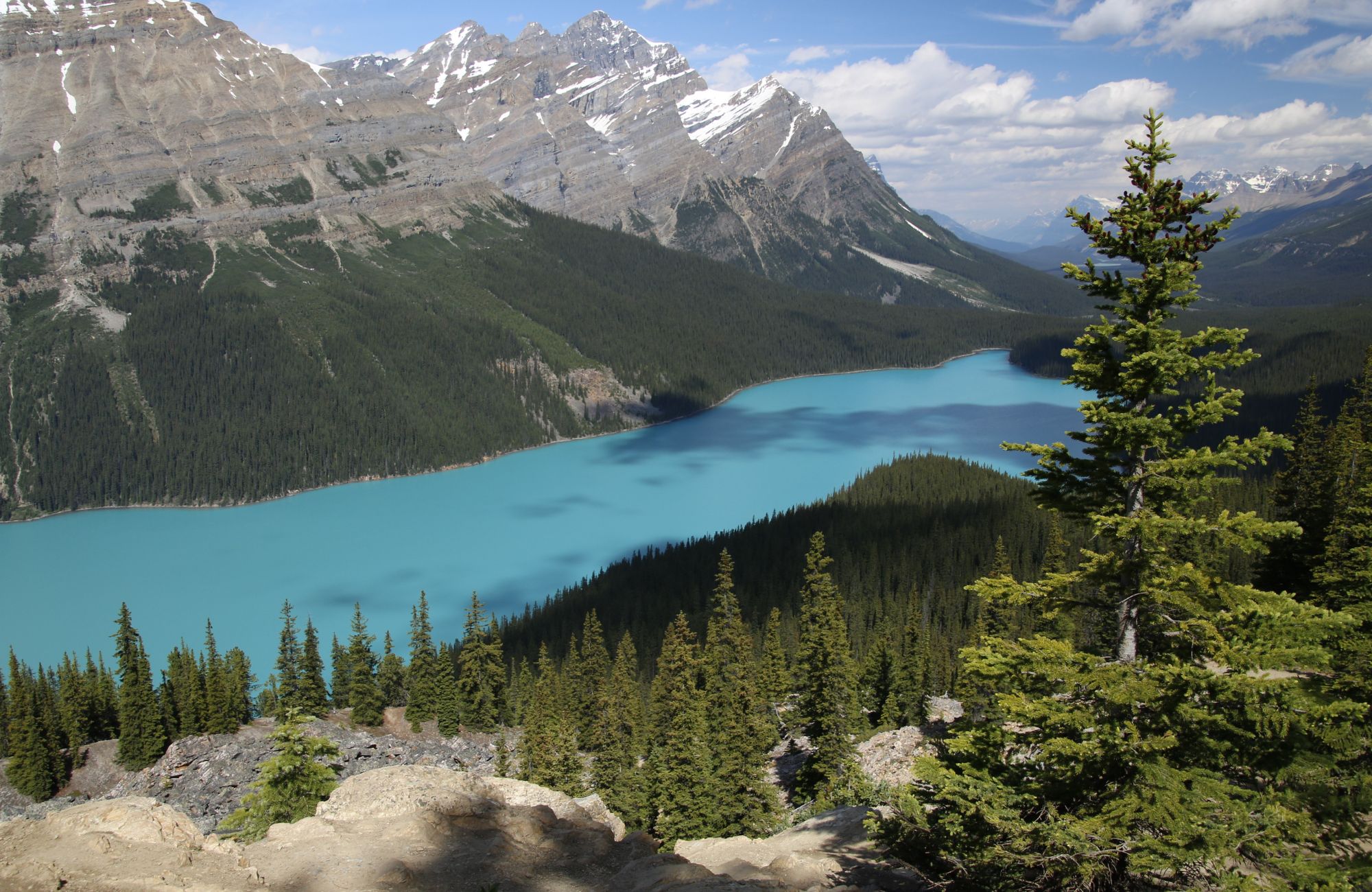
A little further north, Peyto Lake brings the big reveal. Its famous turquoise colour looks almost edited on a clear day, especially from Bow Summit. The main viewpoint is popular for good reason, but the surrounding forest trails are where the visit begins to feel quieter. These glacial lakes are a major highlight of any journey through Banff National Park.
Arrive early if Peyto Lake matters to you. The car park and viewpoint are busiest later in the morning, particularly during peak summer weeks. Beyond these two spots, nearby Waterfowl Lakes and Mistaya Canyon offer stunning hiking trails and powerful water carved through ancient rock, easily rivalling the scenery found back near Lake Louise. There is no prize for trying to visit Bow Lake, Peyto Lake, Waterfowl Lakes, and Mistaya Canyon before lunch. Pick two, walk a little, and enjoy them properly.

Photo by Yajun Dong
The Columbia Icefield is the point where many Icefields Parkway stops become an all-day plan. The road rises into a huge, open amphitheatre of rock, snow, and ice. Even the car park views have a certain theatre to them, especially when you catch your first glimpse of the surrounding Canadian Rockies peaks.
The Athabasca Glacier is the most visible tongue of ice here, but it’s important to treat it with care. Don’t walk onto the Athabasca Glacier independently, as crevasses and unstable ice are real hazards, even when the surface looks harmless. A guided tour is the sensible way to step onto the Athabasca Glacier, while the Icefield Centre gives you a useful place to warm up, eat, and reassess the weather before you get closer to the Athabasca Glacier tongue.
The Glacier Skywalk is another option if you fancy a little engineered drama. The glass-floored platform hangs above the Sunwapta Valley, and the Glacier Skywalk is best enjoyed as part of a longer visit rather than a rushed photo stop. Booking arrangements and opening periods can change, so look at the official Banff Icefields Parkway travel guidance before building your day around it.
As you explore this stretch of the Canadian Rockies, you’ll also pass the towering cascades of the Weeping Wall just down the road. This area is packed with things to do, including rewarding hiking trails that let you escape the main crowds.
Parker Ridge offers a different kind of icefield encounter. The Parker Ridge hike is short in distance but climbs steadily above the road, so it asks more of you than its length suggests. At the top of the Parker Ridge hike, the Saskatchewan Glacier spreads out below, enormous and oddly quiet. It’s one of those views that makes conversation taper off.
Nearby, Wilcox Pass is another fantastic option if you want to stretch your legs. Both Wilcox Pass and the surrounding trails offer incredible vantage points that make these Icefields Parkway stops truly unforgettable.
Take water, a warm layer, sun cream, and a waterproof jacket. At this elevation, blue sky can give way to sleet with surprising speed. If low cloud has settled in, don’t force the hike. Save it for a clearer morning and enjoy the lower viewpoints instead.
These stops work particularly well with an overnight at Saskatchewan River Crossing, Lake Louise, or Jasper, depending on your direction of travel. A night near Saskatchewan River Crossing gives you an early start for the Columbia Icefield. They don’t fit comfortably into a day already packed with lakes and waterfalls.
Once you are closer to Jasper National Park, the scenery changes character. The glacial lakes and icefields are still there, but the Athabasca River takes centre stage on this leg of your Canadian Rockies road trip. It is fast, loud, and not remotely interested in posing politely for photographs.
Sunwapta Falls is a fine first pause. The upper falls are close to the car park, with water squeezing through a narrow gorge before dropping into a deep, foaming pool. Give yourself time to follow the hiking trails further downstream. The crowds thin out, and the forest has a softer feel away from the main platform.
Before you reach the larger sites, Tangle Creek Falls tumbles right beside the highway, offering a quick and easy roadside view. Soon after, Athabasca Falls is only around 31 kilometres from Jasper, according to Parks Canada’s route highlights. It is not the tallest waterfall in the Canadian Rockies, but its sheer power is the main attraction during any Jasper National Park road trip. The river has carved potholes and channels through hard quartzite, and the spray can make paths slippery.
Stay behind barriers and keep a close eye on children. The water moves with startling force, and the smooth rock edges are not places for a better angle.
If you have more daylight in Jasper National Park, continue to the Valley of the Five Lakes. This is a lovely counterpoint to the drama of the stunning waterfalls. The loop passes a series of small glacial lakes, each with its own shade of green or blue, framed by forest rather than bare mountain walls. These popular hiking trails provide a proper walk, not just a roadside attraction, so leave enough time to return before dusk.
Wildlife is part of the magic here in Jasper National Park. It is also why you should never approach animals, feed them, or block the road for a photograph. Keep a generous distance, remain in your vehicle if an animal is beside the road, and let it carry on with its day.
The Icefields Parkway rewards flexibility. Whether you are beginning your journey near Lake Louise or heading south from Jasper National Park, build your day around one headline stop, then add smaller Icefields Parkway stops only if time and conditions allow. Trying to collect every famous name usually leaves you spending more time searching for parking than looking at mountains.
Before leaving your accommodation, download offline maps and check official road and weather updates, especially if you are navigating seasonal winter driving conditions. Ensure you have your Parks Canada pass ready before you set off, and check your vehicle because petrol options are limited on the route. Remember that gas stations are sparse between Lake Louise and Saskatchewan River Crossing, and gas stations on the route close early outside of peak summer. Carry enough fuel for the day, keep snacks, water, a paper map, warm clothes, sun protection, and a basic first-aid kit in the car.
For any hike in Banff National Park or further north, tell someone where you are going and when you expect to be back. Pack more than you think you will need, especially if you plan to walk above the treeline. Afternoon storms are common in the mountains, and daylight disappears earlier than you expect when a valley is enclosed by high peaks.
A few habits make this scenic drive calmer:
If you are planning a road trip during shoulder seasons, remember that winter driving requires winter tyres or chains, and sudden closures can happen on any scenic drive through the Rockies.
The road will still be there tomorrow. There is no need to win it in one go.
Driving the Icefields Parkway directly from Lake Louise to Jasper takes around three and a half hours without stopping. However, because of changing mountain weather, lower speed limits, and numerous scenic viewpoints, most travellers find it takes a full day or longer.
Yes, a valid Parks Canada pass is required for all visitors driving through Banff and Jasper National Parks along Highway 93N. You must display your pass clearly on your vehicle’s rearview mirror throughout your journey.
No, walking onto the Athabasca Glacier without a guide is dangerous due to hidden crevasses and unstable ice. Visitors must join a certified guided tour to safely step onto the glacier surface.
The Icefields Parkway is at its best when you treat it as part of the holiday, not merely the route between Lake Louise and Jasper National Park. Bow Lake invites a slow morning, while Peyto Lake rewards a quiet look across the Canadian Rockies. Parker Ridge asks for a few steady uphill steps, and the Columbia Icefield lets you stand near the edge of the Athabasca Glacier.
Further north, Athabasca Falls gives you a final burst of wild, rushing energy before you reach the end of your road trip in Jasper National Park.
Choose fewer places, give them more time, and keep an eye on the sky. The finest Icefields Parkway stops are the ones you remember long after the sat-nav has forgotten the route, leaving you eager to return to the Canadian Rockies and explore the landmarks near Lake Louise once again.